Overall Comments
Electronic submission, student lives in USA
Summary of video feedback 17 Feb 2015
- Your grasp of reduction print technique has been ably demonstrated
- You have a solid working process from initial drawing through to finished print. Sensibly grounded in the visual experience of your subject matter
- But you will benefit from exploring more ideas before committing to a single idea. Use the notion of an ‘ideas pyramid’
- Blog continues well. More insight to your visual motivations would be helpful
Feedback on assignment
Demonstration of technical and Visual Skills, Quality of Outcome, Demonstration of Creativity
Project 8 Reduction Method Linocutting
Careful attention to printing process has yielded a strong image that works well. Textural effects exploited to show the flat blankness of night sky contrasted with varied marks expressing manmade and natural forms. Conveys a sense too of the artificial colours produced by street lights. Good problem-solving to repair area of lino mistakenly cut away.
Project 9 Experimental Mark Making on Lino
Produced a mark-making vocabulary with potential for future use.
Project 10 Experimental Relief Prints
A good, steady, developmental process is demonstrated, from original drawing stage through to finished print.
Ambition and confidence demonstrated in production of a large A3-A2ish print
Scratch foil drawing has a lovely soft visual quality and I enjoyed the use of tone in preference to line.

Reminiscent of some Philip Guston (1913 – 80) drawings:
Guston Original Inverted


You are right to take abstracted shapes from the view in front of you (e.g. look at Ivon Hitchens [1893-1979]). This avoids the potentially overwhelming possibilities of complete invention. But you also make decisions based on what you feel the image needs e.g. bold primary colours rather than dull winter’s day colours.
Pleased to see artist reference to inspire you (Anne Sumpner Evans). Her work is vigorous and organic. It is worth casting around for work that aligns better with your intentions – even retrospectively. This way you can develop, improve and demonstrate your connection to the wider art world.
You: Lines and mass
Eduardo Chillida (1924- 2002). Note: lines and mass


Ancient architecture: further development?
Laszlo Moholy-Nagy (1895-1946): Texture
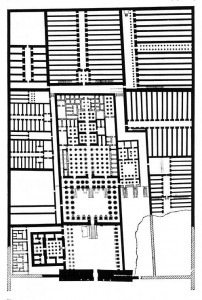

Need to explore some initial ideas before committing to final design e.g. attempts to utilise the Project 9 mark-making in some way. Remember the notion of an ‘ideas pyramid’ we discussed: a broad exploratory base, progressively leading through to single idea. And this idea itself can then be subjected to a similar process (rather as you have done in this project).
Sketchbooks
Demonstration of technical and Visual Skills, Demonstration of Creativity
Looking forward to receiving your sketchbook with physical submission of next assignment – or photocopied pages (less desirable as not actual media).
In this Assignment you have used your book as a working tool to develop your idea, but as stated above, would be good to see a broader engagement with a developmental range of ideas.
(Your quick sketches from TV and your cat ink & wash drawings are attractive and interesting. Maybe worth pursuing?)
Learning Logs or Blogs/Critical essays
Context
Well-organised and easy to navigate.
Working processes are well described and illustrated, including problem-solving.
I suggest you devote some specific space to reflect on your learning journey. I’m still unsure of your artistic and creative preferences, likes and dislikes. I attach a sheet with some suggestions.
You did not carry out reflection against the assessment criteria, p.24.
Good to see you citing your references. Needs a tweak, I have attached the OCA guidance for your convenience
Suggested reading/viewing
Context
Google images and Pinterest will give extensive results for collagraphs.
Can you use this as a vehicle to show me/yourself what you like? Talk about choices in blog. Put artist images next to your own in sketchbook too.
Pointers for the next assignment
Collatypes:
Keep things glued to the base board at a similar height.
Blocks can prove unpredictable in the prints they yield, so be prepared for both good and bad surprises. Play with inking methods and how you lift the print – they can make quite a difference to the outcome. Also play with papers, inks, and colours.
Make explorations and discoveries for yourself. These you can use later on. The test block (Project 11) a very useful learning experience (vocabulary).
Explore, develop a range of ideas, have fun.